September 10 2009
From pinnipeds to tigers, a zoo perspective
Tagged Under : "Blank Park Zoo", "Como Zoo", "husbandry behaviors", "marine mammal trainer", "medical behaviors", "operant conditioning ", "protected contact training", animal, animal training, animal training career, bonobos, conservation, elephant, giraffes, gorillas, interactive programs, lions, orangutans, pinnipeds, sealions, tigers, trainer, veterinary, zoo
Since I was young, I have always dreamed of becoming a marine mammal trainer and in 1988 began by volunteering at a pinniped facility in Milwaukee, WI, which provided shows and interactive programs to the zoo going public. I was fortunate to be hired and began training seals and sea lions just two years later in 1990 and soon became the Senior Trainer. Because the sea lion facility was based in a zoo, the opportunity arose to consult in other areas of the zoo that had training needs and I was able to teach keepers to train a variety of other zoo species operant conditioning techniques to allow simple shifting to complex behaviors in order to cooperate in their own medical care. I quickly became passionate with the ability to teach keepers how to provide the best possible care for their animals which includes shifting animals on/off exhibit or from one enclosure to another as well as to perform medical behaviors from body part presents to advanced behaviors such as blood draws and hand injections.
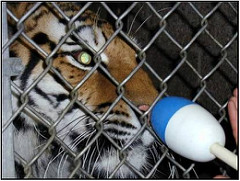
Protected Contact Training
This was a challenge initially as the training with bonobos, gorillas, orangutans, giraffes and elephant is protected contact and is very different from training a sea lion where they are able to physically interact with you. Protected contact was new to me and it means there was a barrier between you and the animals. It is very exciting to see how the same training techniques can be applied to so many different species and how the training at times needs to be modified depending on the species and of course the institutions’ goals. After 10 years in Milwaukee working with an extremely diverse group of animals and trainers/keepers, I decided it was time to venture out on my own and I started my own training consultation company.
I started my first contract with Como Zoo in St. Paul, MN with the primary purpose of developing their seal/sea lion training and educational programs. Just as in Milwaukee, once the keepers from different departments noticed the positive changes that were made with the pinniped collection they wanted to start training their animals. Soon a zoo wide program was initiated and ultimately developed over several years to include the great apes (orangutans & gorillas), hoof stock (zebra, giraffe, kudu), big cats (cougars, snow leopards, tigers, lions) as well as sloths, porcupines, foxes, wolves, snakes, polar bears and tortoises. I have found the key for a successful program is to develop a trusting relationship with all the keepers I work with. The keepers know their animals best and since I only make site visits, it is imperative the keepers relay they correct information back to me. I then began working with Blank Park Zoo in Des Moines, IA to develop their seal/sea lion educational program as well as a big cat training program.
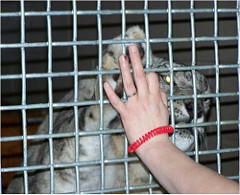
Paw present snow leopard
After several years of training, the lions perform in educational demonstrations for the public to not only show how we can perform voluntary husbandry behaviors but also to highlight their natural behaviors to show a conservation message. The zoo noted the many benefits that the training provided and the program expanded to the whole zoo collection to include gibbons, otters, hoof stock, red pandas and a red tail hawk. I have also had the great opportunity to provide training seminars and training program evaluations for various zoos throughout the mid west.
I never thought when I was young that I truly would be training all these species of animals…dreams can come true if you work hard and are open to what comes across your path in life. This part of my life I did not expect and I am so grateful to be able to get involved and that is conservation work. My partner Dr. Mike Briggs and I started our own not-for-profit organization to perform carnivore research in Africa. I received a veterinary technician’s certification and license in 2004 and we began field work in Africa where Mike had been doing this work for years. Our organization, the African Predator Conservation Research Organization (APCRO) www.apcro.org, goal is to preserve the various carnivores found on the continent of Africa (lions, hyena, wild dogs, leopards, cheetah and jackals). We are a veterinary based organization looking primarily at disease transmission in novel species, emergence of new disease and the genetic and nutritional factors that may be influencing this problem. Doing conservation work to help preserve carnivores along with working with zoos to provide the best care for the animals allows for very complete feeling of self fulfillment, gratefulness, and humbleness to have the pleasure of fulfilling your personal and spiritual goals while spending your life struggling along with others who have the same passion for the best life of both captive and wild animals.
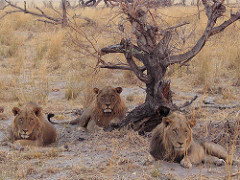
African Predator Conservation Research Organization (APCRO) www.apcro.org